Our Story
It started with one neighbor helping another.
In 2014, there was a waste problem in Santa Teresa and Malpais. No municipal garbage collection. A neighbor running the hotel next door to our founder Nahuel’s place started composting his organic waste, but his methods weren’t working. Fifty people’s worth of breakfast scraps. The smell was drawing complaints.
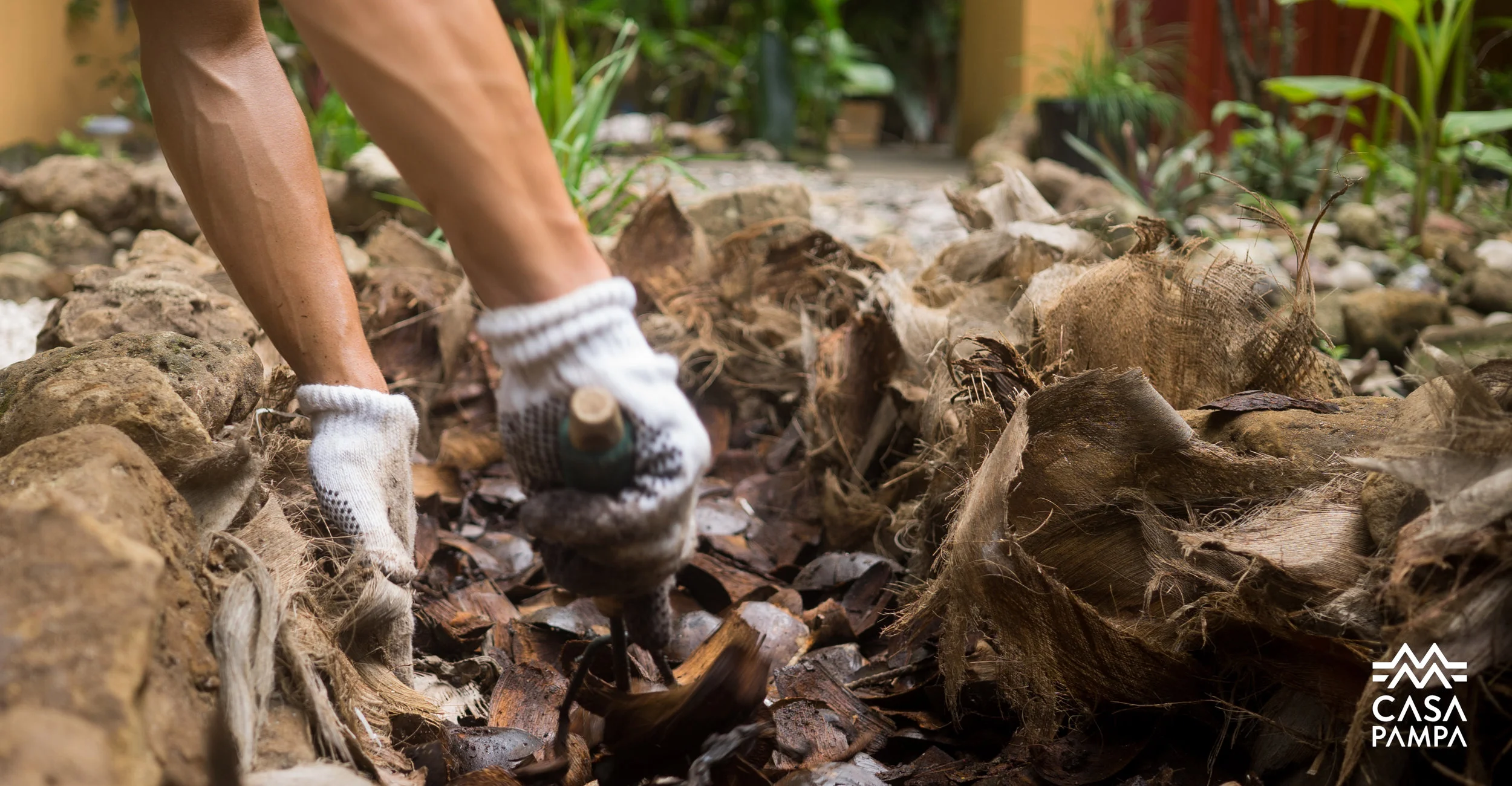
Nahuel knew how to compost. He’d studied organic agriculture at the University of Buenos Aires and had years of hands-on experience. So he stepped in. Not because someone asked him to start an organization. Because a neighbor needed help and he had the skills to fix it.
Nahuel did the math. He could handle the whole community’s organic waste in a small space. As he puts it: he’s a good chef. He can cook for a lot of people in a small kitchen.
He started composting at the local school, where 67 children were generating food waste with nowhere for it to go. Business owners heard about it and started bringing their organic waste on their own. Nobody was breaking any laws. They brought their waste to him. Within six months, there was enough compost to start a garden with the kids.


And It Grew
Through the kids, he reached their families. Through the families, the community.
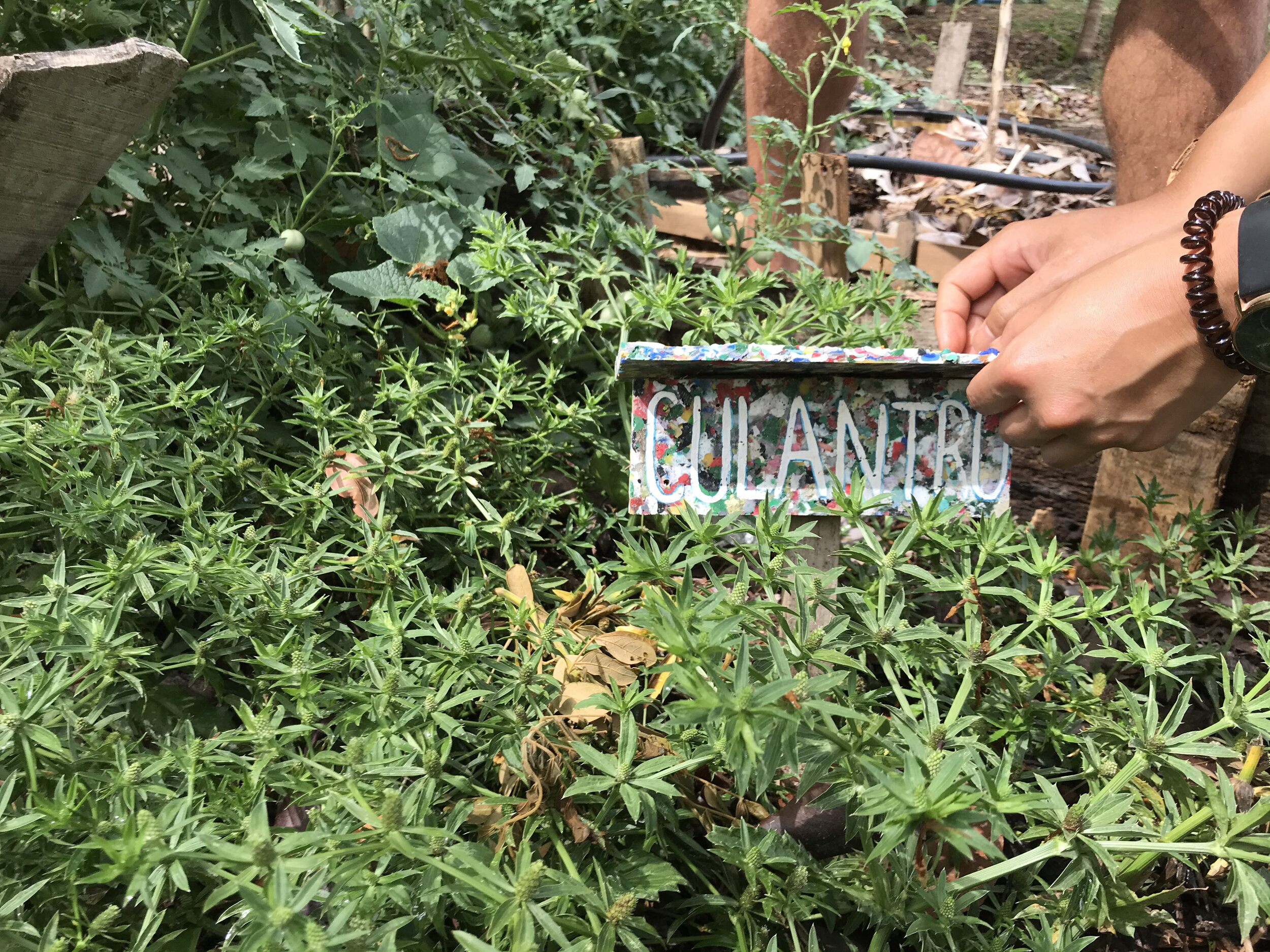
That one act of helping grew into the Compost Club, where we teach anyone how to turn their food scraps into something that feeds the garden. It grew into the community gardens, where anyone can come learn how food is produced without chemicals. It grew into beach cleanups along the Cabo Blanco buffer zone and wildlife monitoring with camera traps in the forest corridors.
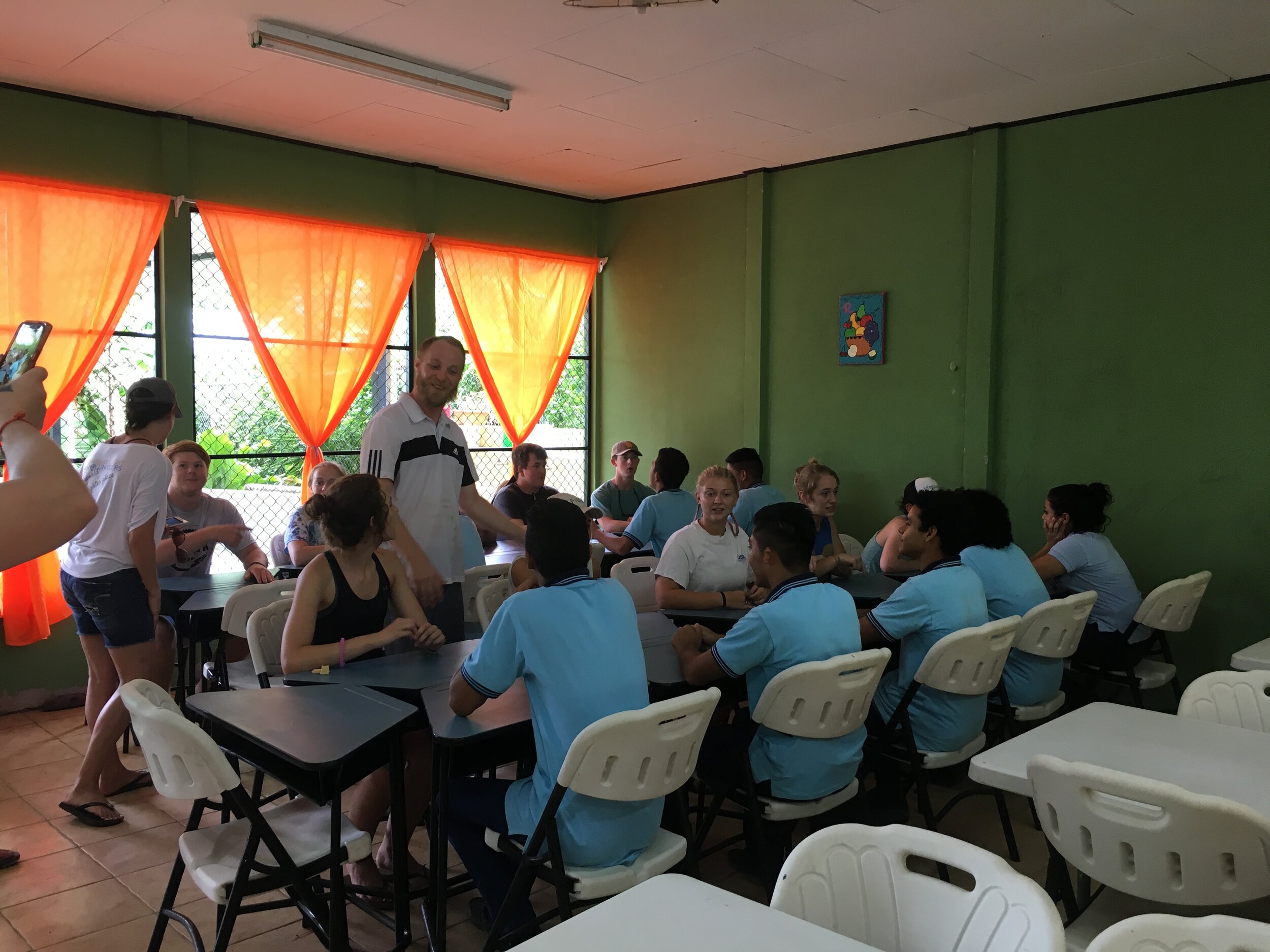
And it grew into a volunteer program and cultural exchange through Spanish lessons. Each new piece started the same way: someone saw a need, and neighbors showed up.
The school that started with 67 children now has more than 300. The community that was 50 families is now over 2,000. More people have arrived in the last five years than were living here before. Santa Teresa became Costa Rica’s second most visited beach. Everything grew fast.
Casa Pampa grew with it. Not by getting bigger. By staying rooted.

Today
In 2017, the team formalized as a nonprofit: the Association for the Innovation and Development of Permaculture and Sustainability. But everyone still calls us Casa Pampa.
Today, with the support of volunteers, the community, local organizations, and the municipal government, we’re still doing what we started doing in 2014: showing up for our neighbors, keeping it simple, and proving that when people work together, the problems that felt too big start getting smaller.
A cattle rancher now runs a composting service for local hotels. Composting is in the district’s official plan. The Peninsular Biological Corridor Association is doing real conservation work with data we helped collect. The seeds we planted are growing in places we didn’t plant them. That’s the whole point.
Where We’re Headed
Nahuel says the goal of a nonprofit is to stop existing. Save the pandas? Great. Pandas are saved. Next problem.
We’re not there yet. But the model is working. People who learned from us are doing the work on their own now. That’s success.
In the future, we see Casa Pampa giving education across Costa Rica. But staying local. Staying grounded in science. Building something that can be adapted and replicated anywhere a community decides to show up for itself.
Nahuel talks about the vision for this place: not the destination known for the best parties, but the cradle of conservation in Costa Rica. The place people come to do research, to learn, and to help.
The tree’s going to be here for four or five generations. We’re here for a little time. But what we plant together keeps growing.
Come see what’s growing.