We envision a world where communities are resilient because neighbors show up for each other, food grows locally, and people live in harmony with each other and the land they share.
Our Purpose
We partner with our neighbors to grow a living example of how communities can care for each other and the land.
That’s what we actually do every day in Santa Teresa. We show up, we work alongside the people who live here, and together we prove that a different way of living isn’t something to hope for someday. It’s something we can build right now, with what we have.
Our Commitments
Five commitments guide everything we do. They’re how we decide what to take on, what to say no to, and how to show up.
COMMUNITY
FIRST
SIMPLE BY
DESIGN
ECOSYSTEM
STEWARDSHIP

GROUNDED IN
SCIENCE
BUILDING
BRIDGES
Community First
By starting with our neighbors to solve local problems together.
We don’t start with a plan. We start with a conversation. What does this neighborhood need? What can we do about it with what we have?
Our founder, Nahuel, started composting because his neighbor’s compost pile was causing problems and he knew how to fix it. He didn’t write a grant proposal. He just helped. That spirit hasn’t changed.
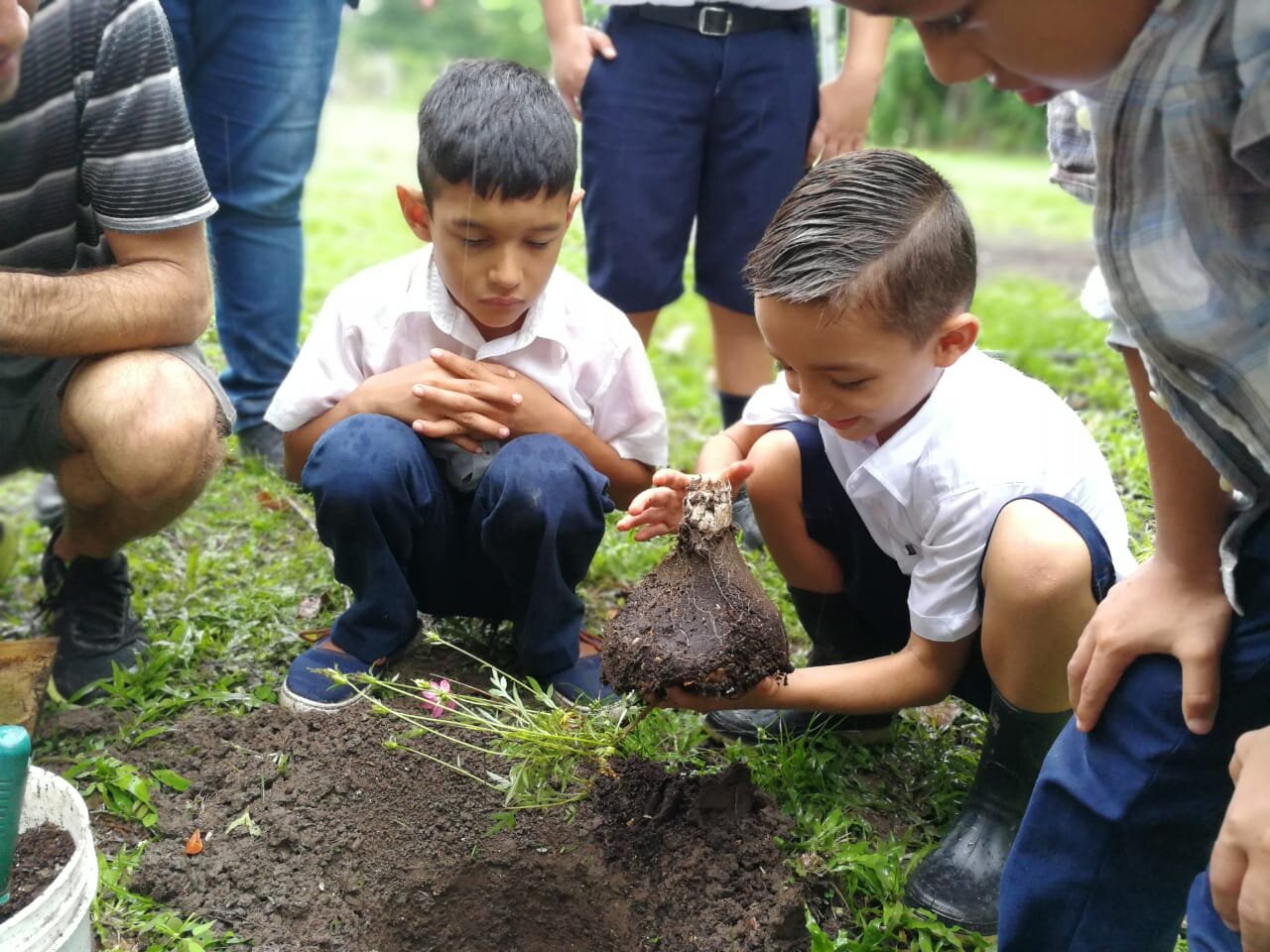
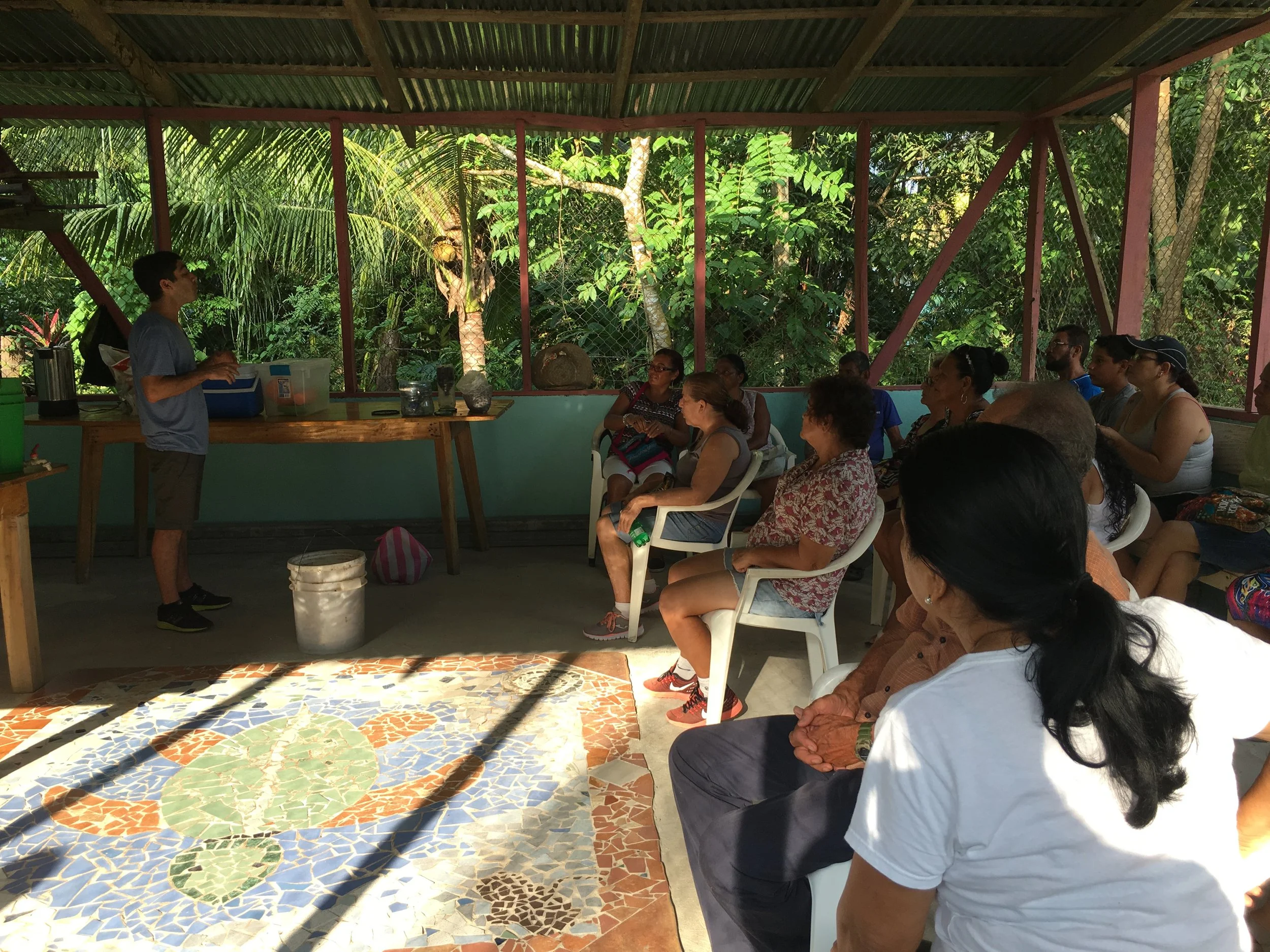
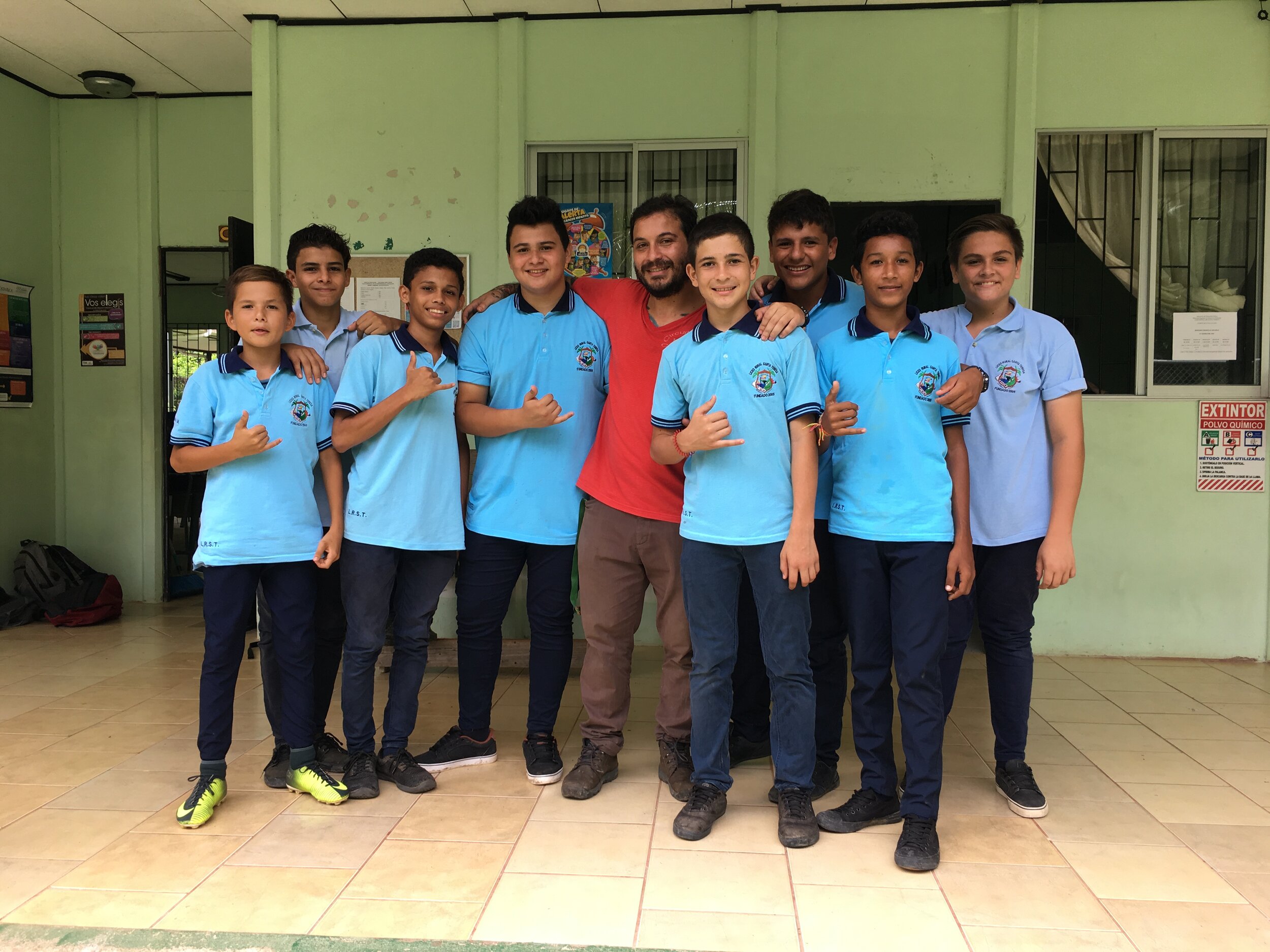
We teach at the local school. We work with the municipal government. We run workshops at the garden where anyone can show up. The people who live here aren’t our “beneficiaries.” They’re our neighbors. We figure things out together.
One of the children Nahuel taught at the school, Genesis, is now a 27-year-old environmental engineer working in local government. He ran into her recently and she reminded him she’d been one of his students. That’s the kind of impact that doesn’t show up in a report. But it’s the kind that matters most.
When a community knows its neighbors, it’s resilient. When a drought hits or a storm comes through, you already know who to call. That’s not something you build after the crisis. It’s something you build every day, one conversation at a time.
Simple by Design
By making education and action accessible, low-cost, practical, and easy to replicate.
If it costs too much money or takes fancy equipment, most people won’t do it. That’s not a complaint. It’s a design principle.
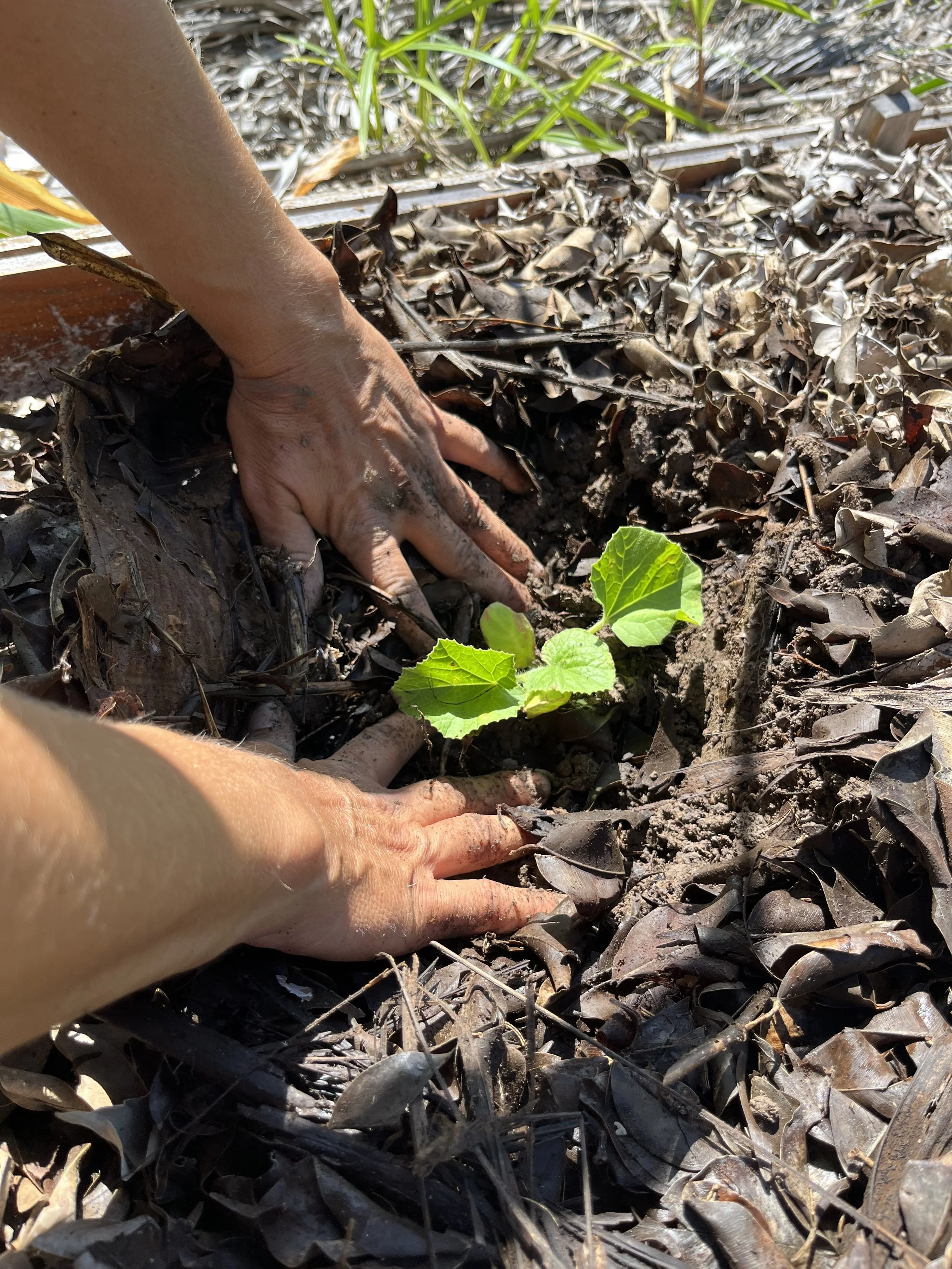
We focus on things that can be done at home with what you already have. Our composting methods use pallets. Our garden techniques work in rocky clay soil without expensive inputs. You don’t need a degree. You don’t need a budget. You need your hands and a little curiosity.
This matters because we’re not trying to build a showcase. We’re trying to build a model that anyone can take home and replicate. A farmer in Cobano or a family in Paquera should be able to look at what we do and think: I can do that too.
That’s the test. If it can’t be replicated, it doesn’t count.
Grounded in Science
By backing what we do with research, data, and scientific rigor.
We get our hands dirty. We also know why what we’re doing works.
When we say composting at the point of generation is better than centralized collection, we can point to the research. When we say a forest corridor needs reconnecting, we have the camera trap data to show which species are moving through and where the gaps are.
A government official from Peru who interned with us produced a full economic analysis of composting’s impact on municipal waste costs. We used that data to help convince the local mayor to include composting in the district’s official plan. It took years. But it’s in the plan now because the numbers backed it up.
We share the science in ways that make people curious, not confused. And for anyone who wants to geek out on the details, we’re always happy to point you to the data.
Ecosystem Stewardship
By protecting and connecting the ecosystems we share.
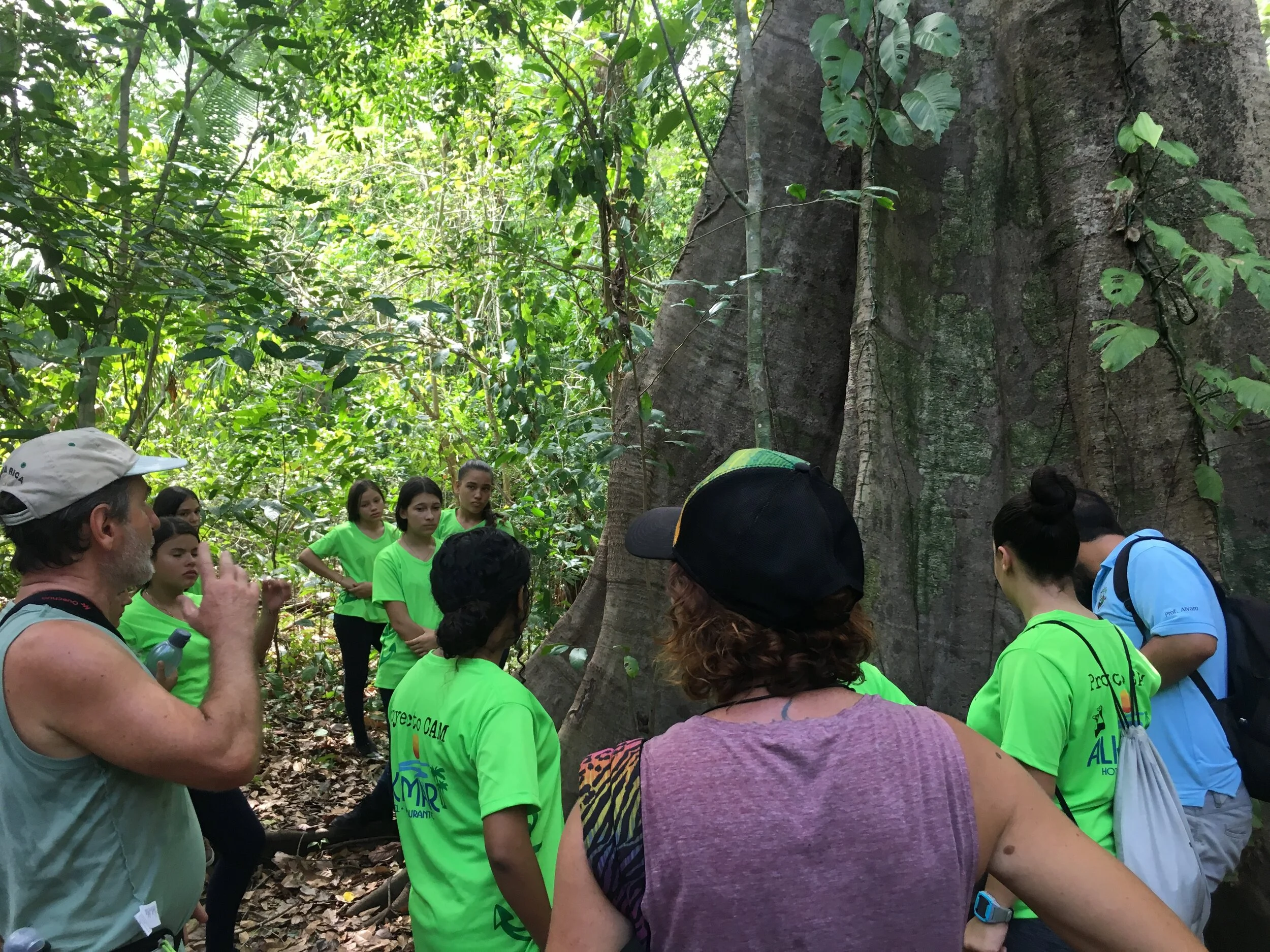
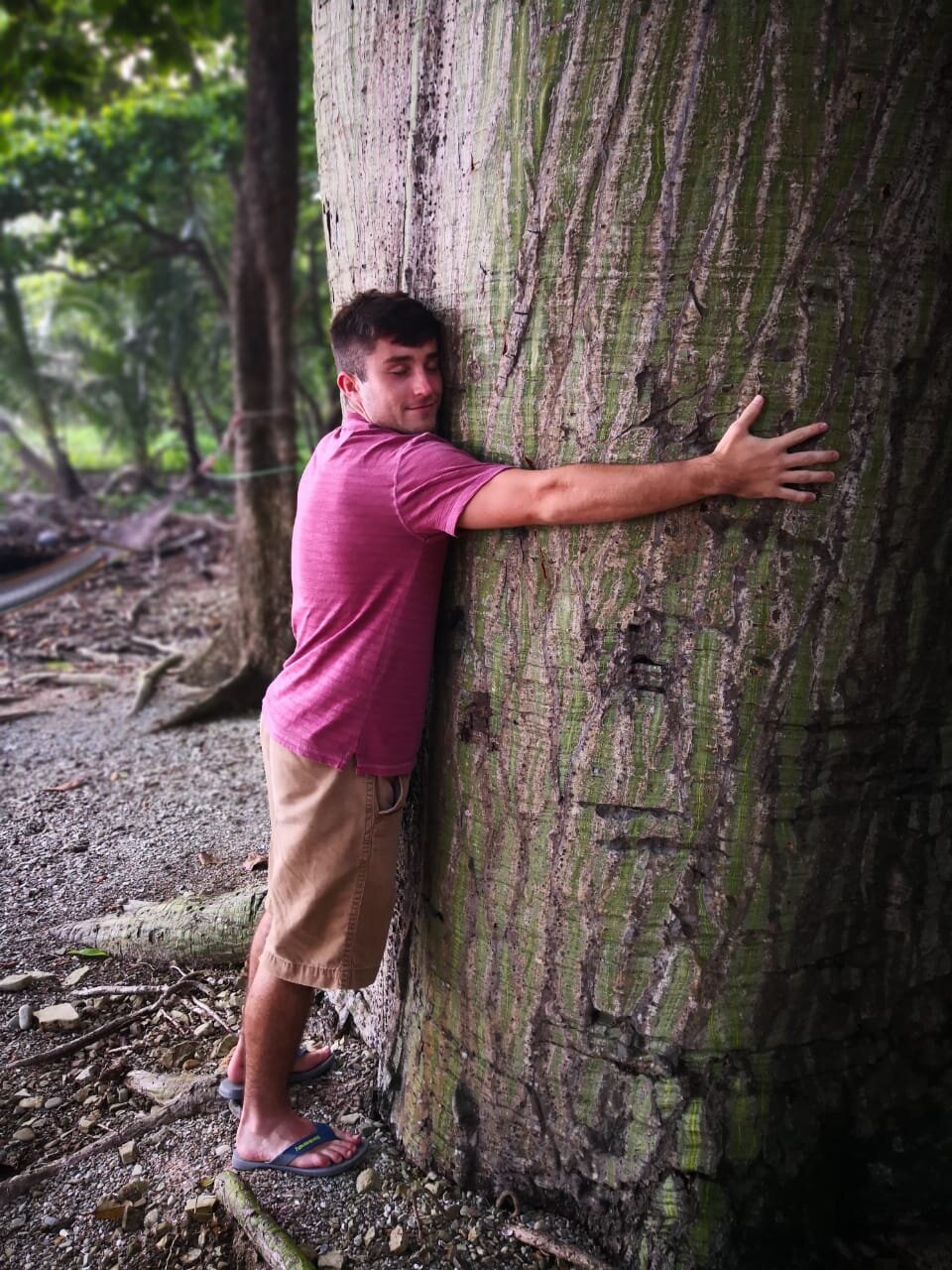
Cabo Blanco was Costa Rica’s first national park. We’re on the southern tip of the Nicoya Peninsula, a region recognized as a Blue Zone. The ecosystems here are extraordinary, and they’re under pressure.
Our beach cleanups in the Cabo Blanco buffer zone keep plastic and microplastics out of a maritime protection zone where marine life is thriving. The snorkeling at Playa Cueno is remarkable because of that protection.
Our wildlife monitoring work with the Peninsular Biological Corridor Association tracks the paths animals use between protected areas. Wild cats and other species need connected forest corridors to survive. When a corridor breaks, populations get isolated. Our camera traps tell us exactly where the gaps are so we can focus on reconnecting them.
Nahuel talks about the vision for this area: not the place known for the best parties, but the cradle of conservation in Costa Rica. The place people come to do research and help conservation globally. That’s the direction we’re heading.
Building Bridges
By connecting people, organizations, and visitors to place-based conservation.
Nahuel’s superpower is relationships. Making things happen between people who wouldn’t otherwise meet. That’s baked into how Casa Pampa works.
We connect volunteers from around the world with meaningful work alongside local neighbors. We bridge the school and the municipal government with environmental education. We partner with the Peninsular Biological Corridor Association on wildlife monitoring that neither of us could do alone.
When a tire recycling campaign happened in the district, it started because Nahuel and a friend got together for drinks and connected the right people. Nobody planned it from above. It happened because people who care about the same things ended up in the same room.
Our Spanish lessons are a bridge too. When a visitor learns even a little Spanish, conversations open up. They stop being a tourist and start being a neighbor, even if just for a little while. The revenue from those lessons goes directly back into the conservation and community work.
We want the right kind of people to find this place. Researchers, educators, professionals who bring new ideas and new energy. Their families visit. Their friends hear about the community. We attract the people who make this place stronger.
Our Values
These are how we show up for each other.
Solidarity
We’re in this together. Your problem is our problem.
Empathy
We listen before we act. We try to understand before we try to fix.

Integration
Everything connects. The compost feeds the garden feeds the community feeds the compost.

Innovation
We look for better ways. Not fancier ways. Better.

Respect
For each other, for the land, for the science, for the process.
That’s why we’re here. That’s how we work.
Want to see it in action? Or ready to be part of it?